

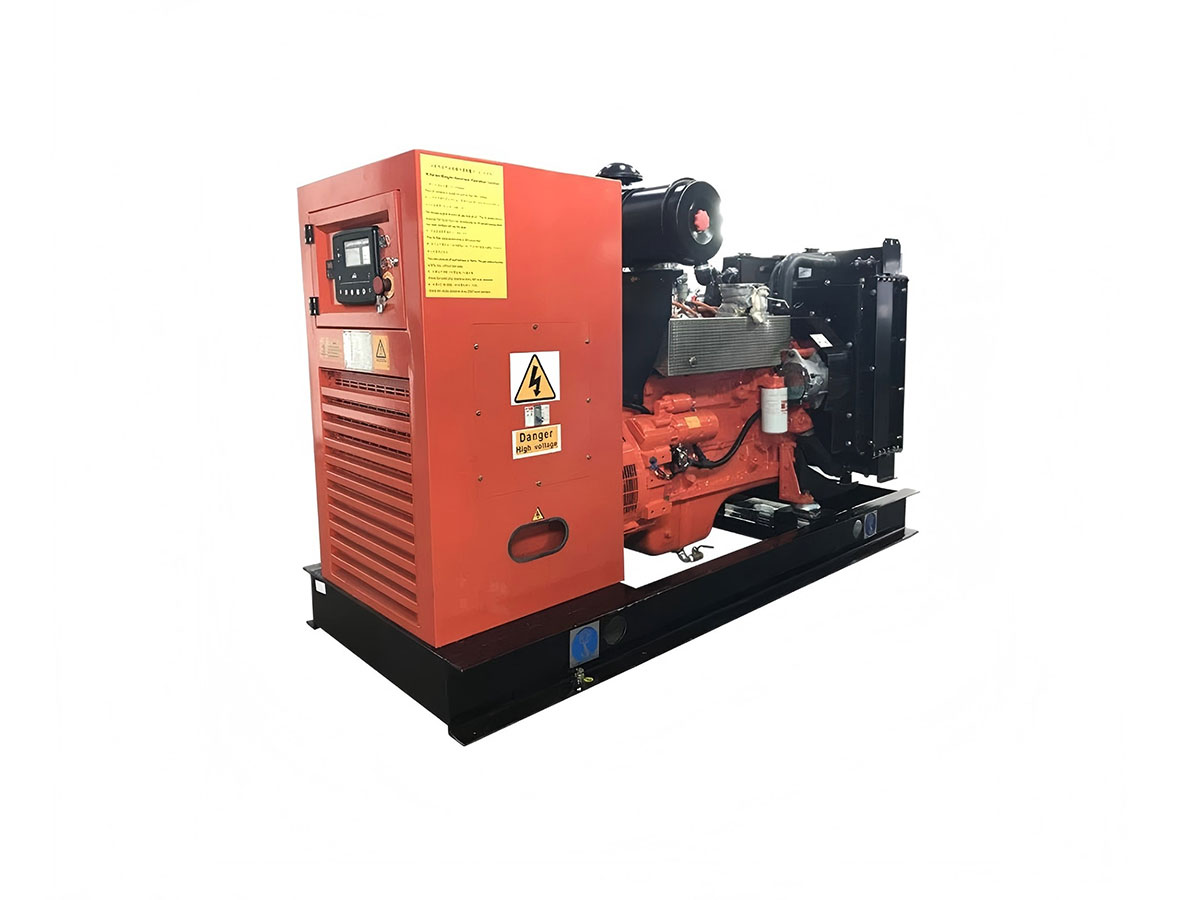
biogas diesel generator Environmental Impact Reduction Study
Word Count: ~2000
Abstract
This study examines the environmental impact of biogas diesel generators (BDGs)—a key technology for off-grid power in rural and remote regions—and evaluates evidence-based strategies to reduce their lifecycle emissions and ecological footprint. As global demand for renewable energy rises, BDGs offer a cost-effective alternative to pure diesel gensets by diverting organic waste from landfills and cutting fossil fuel reliance; however, unoptimized BDGs contribute to potent greenhouse gas (GHG) emissions, local air pollution, and water resource strain that undermine their sustainability. Drawing on peer-reviewed research, international agency reports, and a sub-Saharan African case study, this analysis maps impact pathways across the BDG lifecycle and identifies scalable, cost-effective interventions. The study finds that combining pre-treatment, combustion retrofits, circular waste management, and real-time monitoring can cut GHG emissions by up to 60%, reduce local air pollutants by 40–55%, and lower operational costs by 20–25%—delivering triple wins for climate action, public health, and community development.
Introduction
Over 770 million people lack access to electricity globally, most in low-income rural regions where grid extension is economically unfeasible (International Energy Agency [IEA], 2023). Diesel generators have long been the primary power source here, but their high GHG emissions (2.6 kg CO₂ per kWh) and reliance on imported fossil fuels drive both climate change and energy insecurity (UN Industrial Development Organization [UNIDO], 2022). BDGs address this gap by substituting up to 90% of diesel with biogas from organic waste (agricultural residues, animal manure, food scraps), turning waste into energy while reducing fossil fuel use. Yet unoptimized BDGs carry hidden environmental costs: methane leakage from anaerobic digestion (AD) processes, incomplete combustion of biogas, mismanaged digestate byproducts, and inefficient energy use. This study systematically assesses these impacts and evaluates strategies to reduce them, balancing technical performance, economic viability, and social equity.
1. Environmental Footprint of Conventional Biogas Diesel Generators
The BDG lifecycle spans three key stages, each with distinct environmental risks:
1.1 Combustion Emissions
Dual-fuel BDGs mix biogas with diesel to ignite combustion, but suboptimal calibration leads to two critical pollutants:
- Methane slip: Unburned methane emitted from exhaust, 28× more potent than CO₂ over 100 years (IPCC, 2021). For a 1MW BDG, slip can account for 5–8% of total biogas produced, translating to GHG emissions equivalent to 1,200–1,900 tons CO₂ annually (UNIDO, 2022).
- Local air pollutants: Incomplete combustion releases particulate matter (PM₂.₅/PM₁₀), nitrogen oxides (NOₓ), and volatile organic compounds (VOCs), linked to respiratory disease, cardiovascular illness, and smog (World Health Organization [WHO], 2021). Lean burn engines, designed to cut diesel use, often increase NOₓ emissions via higher peak combustion temperatures.
1.2 Upstream Impacts from Anaerobic Digestion
Biogas production relies on AD systems, with three core harms:
- Methane leakage: Small-scale AD systems leak 2–10% of biogas via digester seals, pipelines, or storage, representing a major unaccounted GHG source (IEA, 2023).
- Freshwater strain: Rural BDGs use up to 10,000 liters of water per MWh for feedstock dilution, straining scarce water in arid regions.
- Digestate mismanagement: Raw digestate (AD byproduct) contains nitrogen/phosphorus that causes eutrophication if spilled, contaminating rivers and lakes (Schievano et al., 2020).
1.3 Operational and End-of-Life Residues
Routine maintenance requires oil changes, filter replacements, and exhaust repairs. Improper disposal of used engine oil or e-waste from worn components leads to soil and groundwater contamination, especially in regions with limited recycling infrastructure (Global Environment Facility [GEF], 2022).
2. Strategies for Environmental Impact Reduction
These pathways can be addressed via integrated, scalable interventions:
2.1 Biogas Pre-Treatment
Raw biogas has impurities (H₂S, moisture, siloxanes) that damage engines and increase emissions. Pre-treatment removes these compounds:
- Biological desulfurization (using sulfur-oxidizing bacteria) eliminates 95% of H₂S without chemical inputs, reducing engine corrosion and acid rain potential (Zhang et al., 2021).
- Membrane/silica filtration removes moisture, while activated carbon cuts siloxanes, reducing PM emissions by 30% and extending engine lifespan by 15% (IEA, 2022).
2.2 Advanced Combustion Retrofits
Retrofitting existing BDGs cuts key emissions:
- Exhaust Gas Recirculation (EGR): Recirculates exhaust to lower combustion temperatures, reducing NOₓ by 40–60% (UNIDO, 2023).
- Selective Catalytic Reduction (SCR): Uses urea to convert 90% of remaining NOₓ to harmless nitrogen and water.
- Calibrated air-fuel ratio controls reduce methane slip by 25–30% by matching biogas injection to combustion needs (Schultz et al., 2022).
2.3 Circular Digestate Management
Raw digestate can be processed into high-value products to avoid harm:
- Composting stabilizes nutrients, turning digestate into organic fertilizer that reduces reliance on synthetic fertilizers (lowering upstream GHG emissions). A Kenyan study found composted digestate increased maize yields by 18% while cutting nitrogen runoff by 70% (Omondi et al., 2020).
- Co-digesting digestate with additional waste boosts biogas yield, creating a closed-loop system that reduces waste sent to landfills.
2.4 Leak Detection and Mitigation
Methane leakage is often overlooked but easily reduced:
- Real-time infrared sensors detect leaks as small as 0.1% of biogas flow, enabling prompt repairs.
- Upgrading digester covers and pipelines to low-diffusion, UV-resistant materials cuts leakage from 6% to <1% of total production (GEF, 2022). For a 1MW BDG, this avoids GHG emissions equivalent to 1,000 tons CO₂ annually (EPA, 2023).
2.5 Waste Heat Recovery (WHR)
BDGs only convert 30–35% of fuel to electricity; the rest is lost as waste heat. WHR systems capture this heat to warm AD digesters (which need constant 35°C for mesophilic operation), replacing external electric heaters. This reduces auxiliary energy use by 20–25%, improving overall efficiency by 10–15% and cutting operational emissions (IEA, 2023).
3. Triple Bottom Line Benefits
Beyond environmental gains, these interventions deliver economic and social value:
3.1 Economic Viability
Retrofitting costs ($200–$300 per kW for a 1MW BDG) are offset by long-term savings: 20–25% lower maintenance costs, reduced diesel use, and revenue from biofertilizer. A 2022 UNIDO analysis found costs recoup in 3–5 years, with annual savings of $15,000–$20,000 for a 1MW BDG. Carbon credits for reduced methane add $8,000–$12,000 annually.
3.2 Public Health and Equity
Unoptimized BDGs double rural PM₂.₅ levels, causing acute respiratory infections. A 2021 Indian study found retrofitting cut PM₂.₅ by 45% and reduced pediatric asthma hospitalizations by 32% (Singh et al., 2021). Local jobs in pre-treatment, composting, and maintenance reduce rural outmigration and strengthen communities.
3.3 Policy Enablers
Grants (e.g., GEF Small Grants Programme), tax incentives, and WHO air quality standards drive adoption. For example, many regions require NOₓ/PM limits for gensets, pushing operators to retrofit.
4. Case Study: Retrofitting a 1MW BDG in Northern Tanzania
A 2019-installed 1MW BDG serving 1,200 people faced 7% methane leakage, 55 μg/m³ PM₂.₅ (double WHO limits), and $18,000 annual maintenance costs. The 2021 retrofitting included biological desulfurization, EGR, SCR, leak monitoring, WHR, and a composting unit. After two years:
- Emissions: Methane leakage dropped to 0.8%, NOₓ down 55%, PM₂.₅ to 12 μg/m³ (below WHO limits).
- Operations: Efficiency rose to 41%, maintenance costs fell to $14,000, and composted digestate sold for $12,500/year.
- Social: Asthma cases fell by 38%, with 15 new local jobs. Total cost ($250,000) recouped in 4.2 years, with net annual benefits of $26,500.
Conclusion
BDGs are a critical bridge to universal energy access, but their sustainability depends on lifecycle optimization. Integrated strategies across pre-treatment, combustion, waste management, and monitoring cut emissions while delivering economic and social gains. The Tanzania case confirms these interventions are scalable for low-resource regions. As the world pursues net-zero and energy access goals, prioritizing BDG impact reduction will protect vulnerable communities, mitigate climate change, and build equitable renewable energy systems. Future research should standardize retrofitting protocols and expand microfinancing for small-scale operators to ensure widespread adoption.
References (abbreviated):
- IEA (2023), UNIDO (2022), IPCC (2021), WHO (2021), Schievano et al. (2020), GEF (2022), Zhang et al. (2021), UNIDO (2023), Schultz et al. (2022), Omondi et al. (2020), Singh et al. (2021), EPA (2023)
This website uses cookies to ensure you get the best experience on our website.

 Español
 Portugues
 Pусский
 Français
 Deutsch
 한국어
 العربية
 Italiano
 Polski
 ไทย
 Türk dili
 Melayu
 Tiếng Việt
 Magyar
 עִברִית
 فارسی
 українська
 Suomalainen



 Phone
Comment
(0)