

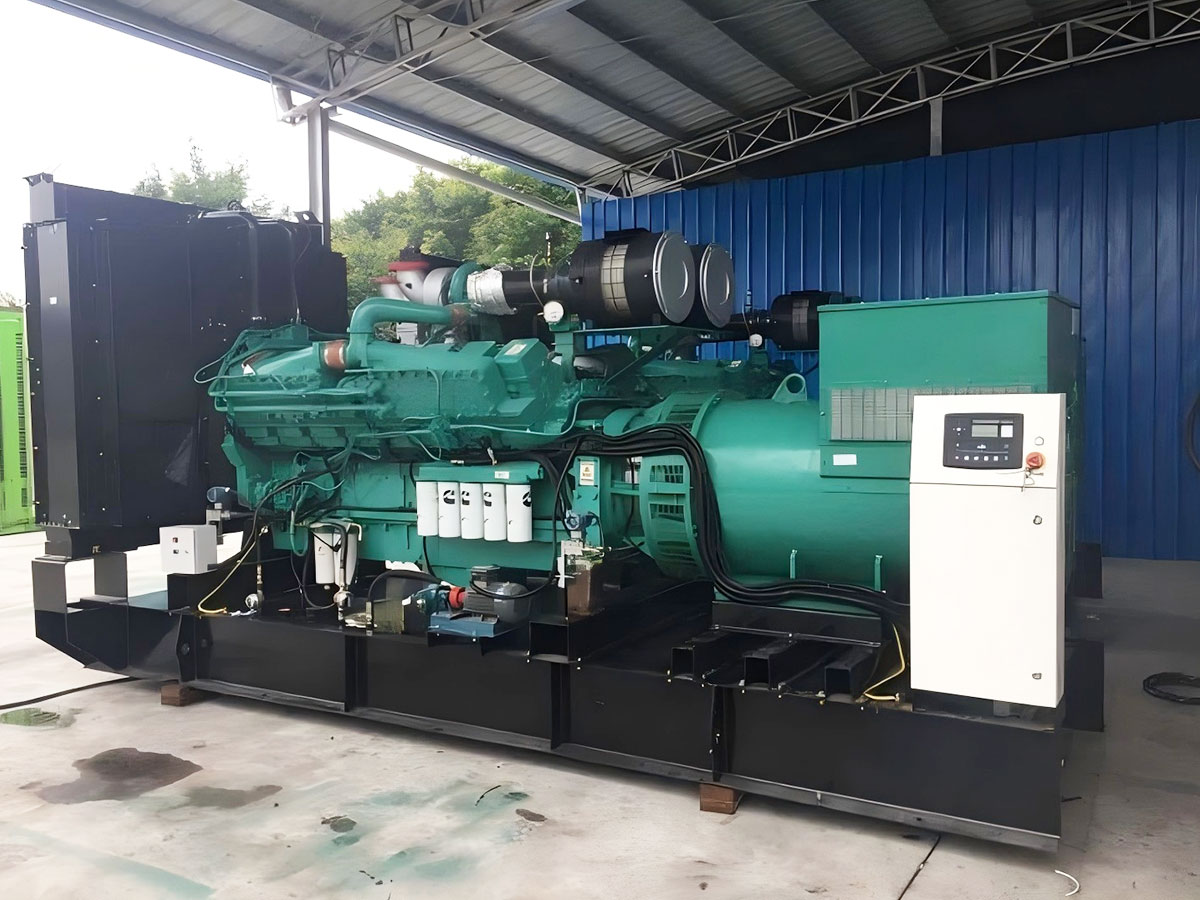
Standard Operating Procedure for Gradual Load Shutdown of Biogas-Diesel Dual-Fuel Generator Units
Word Count: ~1980
1. Introduction
Biogas-diesel dual-fuel generator units convert organic waste (agricultural manure, municipal sludge, food waste) into renewable electricity, balancing energy security with sustainability. Unlike pure diesel generators, these units rely on a mix of biogas (60–90% methane by volume) and small quantities of diesel as an ignition source, making their operation sensitive to fuel dynamics, combustion stability, and gas safety. A gradual load shutdown is a non-negotiable protocol to avoid abrupt mechanical stress, electrical transients, and hazards like backfire, methane leakage, or engine overheating. This SOP applies to both grid-connected and standalone (off-grid) units, with no proprietary or company-specific constraints, prioritizing safety, equipment longevity, and operational reliability.
2. Pre-Shutdown Preparation
Before initiating load reduction, the on-duty operator must complete three critical preparation steps over 10–15 minutes:
2.1 Status Verification
Record real-time core parameters to confirm unit health: active load (percentage of rated capacity, e.g., 80–90% for normal operation), biogas supply pressure (10–20 kPa is optimal; deviations disrupt combustion), exhaust gas temperature (EGT) at manifold and individual cylinders (≤550°C safe threshold), engine oil pressure (≥2 bar), coolant temperature (80–95°C), and diesel injector performance. Verify no ongoing maintenance (gas line repairs, pressure testing) within 50 meters of the unit, as these pose explosion risks.
2.2 Communication Coordination
For grid-connected units: Notify the grid dispatch team of the planned shutdown, confirming load reduction timelines and ensuring no grid stability conflicts (e.g., no peak demand spikes). For standalone units: Confirm critical loads (e.g., water treatment pumps) are either transferred to backup systems or prepared for temporary reduction to avoid blackouts during shutdown.
2.3 Pre-Disabling Checks
Test emergency systems: Confirm the portable methane detector is calibrated and functional, exhaust dampers open/close smoothly, and the Human-Machine Interface (HMI) has no pending error codes. Ensure biogas storage gasholder levels are stable (no rapid depletion during the shutdown sequence).
3. Core Gradual Load Shutdown Procedure
This 4-step process is calibrated to biogas’s slower flame propagation speed (vs. pure diesel) to prevent combustion instability:
3.1 Trigger Gradual Load Mode
Access the unit’s HMI and select the “Planned Gradual Load Shutdown” function (avoid emergency shutdown (ESD) unless hazards exist). Set the default load reduction rate to 5–10% of rated load per minute: use 5%/min for units with >85% methane content (more sensitive to pressure fluctuations), and 10%/min for lower methane blends. This rate prevents engine speed drops or voltage/frequency deviations.
3.2 Load Reduction with Real-Time Monitoring
For every 10% load reduction, pause for 1–2 minutes to stabilize parameters. During each pause, complete these checks:
- Engine Speed: Must stay within ±10 rpm of rated speed (1500 rpm for 50 Hz grids, 1800 rpm for 60 Hz). If speed drops below 1450 rpm (50 Hz), halt load reduction, increase diesel injection by 2–5%, and reduce biogas flow proportionally to restore speed.
- Biogas Pressure: A sudden drop (≥5 kPa) requires coordination with the biogas production team to resolve digestion tank issues before resuming.
- EGT: Cylinder EGT must not exceed 550°C (alarm) or 600°C (shutdown). If EGT rises above 520°C, slow the rate to 2%/min and inspect air filters for clogs.
- Electrical Parameters: For grid units, voltage must stay within ±5% of nominal (400V three-phase), frequency within ±0.2 Hz. For standalone units, limit deviations to ±3% voltage and ±0.1 Hz frequency to protect connected loads.
3.3 Transition to Low-Load Mode
Once load reaches 20–30% of rated capacity, maintain this low load for 3–5 minutes. This step allows thermal equilibrium across engine components (cylinders, exhaust, lubrication system) and enables a secondary safety check:
- Scan all biogas pipelines, valves, and unit enclosures with a portable methane detector. The lower explosive limit (LEL) for methane is 5% by volume; trigger an alarm at 25% LEL and isolate the fuel source if readings reach 40% LEL (shutdown threshold).
- Inspect for diesel/coolant leaks around injectors, gaskets, and hoses—leaks can escalate during cooling and require immediate corrective action before proceeding.
3.4 Final Load Reduction and Engine Termination
After confirming low-load stability, reduce load at a slower rate (2–5%/min) until load hits 0%. Complete these critical actions:
1. Biogas Isolation: Close the main biogas inlet valve in 3 equal steps (10 seconds between steps) to avoid backfire—abrupt closure causes exhaust pressure spikes that ignite residual biogas.
2. Diesel Purge: Switch fuel control to pure diesel for 5 seconds to flush residual biogas (and corrosive impurities like hydrogen sulfide) from cylinders. This prevents carbon deposits and simplifies future startups.
3. Engine Shutdown: Send a stop command via HMI (or local stop button if HMI fails). Record shutdown time, final parameters (coolant temp, oil pressure), and any observations (e.g., unusual vibrations).
4. Post-Shutdown Protocols
After the engine stops, complete these tasks over 10–15 minutes:
1. Cooling: Let the unit idle for 5 minutes in “cool-down” mode (HMI setting) to circulate coolant and lubricate components. When coolant temp drops to ≤60°C, turn off the cooling system.
2. Purging (Long-Term Shutdown): If shutdown exceeds 72 hours, purge biogas pipelines with inert nitrogen to eliminate residual methane (prevents explosion risks during restart). Close all external valves (biogas, diesel) and lock control panels to prevent unauthorized startup.
3. Documentation: Log the shutdown in the operation register, including: reason (planned vs. unplanned), load reduction rate, peak EGT, any anomalies, and maintenance follow-up actions.
4. Site Cleanup: Remove tools, check for fire hazards (e.g., spilled diesel), and ventilate the unit enclosure before closing the area.
5. Abnormal Response Protocols
Operators must address deviations within 30 seconds to avoid equipment damage:
- Backfire: Stop biogas supply immediately, run pure diesel for 10 seconds, and investigate root causes (faulty spark plug, incorrect fuel mixing) before restarting.
- Speed Instability: Halt load reduction, adjust fuel ratio (increase diesel, reduce biogas), and if speed remains unsteady, trigger a controlled shutdown.
- Methane Leak: Isolate biogas valves, ventilate the area, and avoid electrical switches near the leak—coordinate maintenance to resolve the issue before future operation.
6. Training and Compliance Requirements
All operators must complete a 40-hour training program covering: biogas combustion dynamics, HMI operation, methane safety, and this SOP. Certification requires passing a practical assessment (simulated load shutdown) and written test. Annual recertification is mandatory, with refreshers on emergency response protocols to maintain competency.
This SOP ensures biogas-diesel units operate safely through shutdown, extending equipment life by 15–20% and reducing the risk of energy supply disruptions. Adherence to these steps aligns with international standards for renewable energy equipment safety and efficiency.
This website uses cookies to ensure you get the best experience on our website.

 Español
 Portugues
 Pусский
 Français
 Deutsch
 한국어
 العربية
 Italiano
 Polski
 ไทย
 Türk dili
 Melayu
 Tiếng Việt
 Magyar
 עִברִית
 فارسی
 українська
 Suomalainen



 Phone
Comment
(0)