

1000KW Gas Generator configurate with Cummins K50N-G10 engine, Leroy Somer Alternator. Widely use natural gas as fuel, it always installed inside the container with Remote Horiztontal Radiator, Heat Recovery. the voltage can be 400V, 6.3KV, 10.5KV for optional.
the generator have high effecient, competitive price compare to Jenbacher, MWM, Catepillar. outstanding quality than Chinese brand engine.
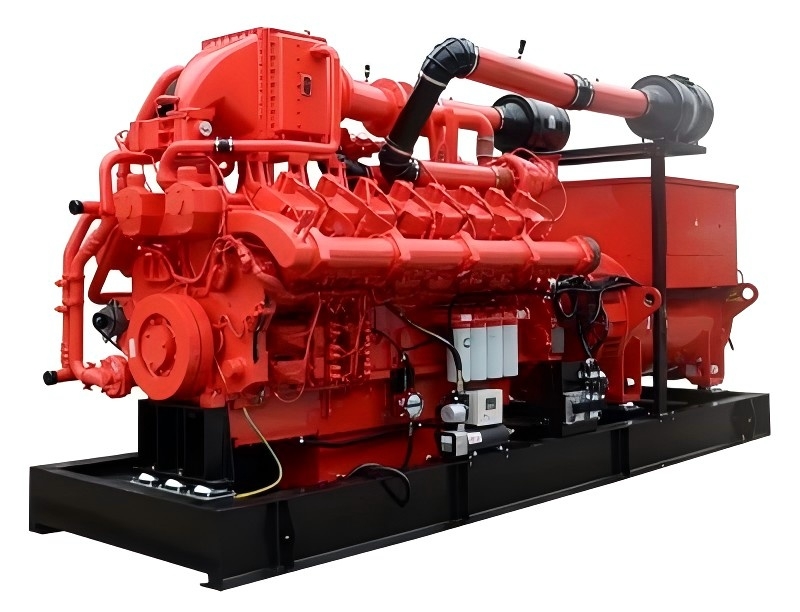
Container type with heat recovery gas power plant.
Hot Tags: 1000mw natural Gas Generator Set, China, suppliers, manufacturers, factory
1000MW Natural Gas Generator Set – My Field Perspective on Large Scale Power Systems
When people hear 1000MW Natural Gas Generator Set, it sounds like something extremely complex and far away from daily life. But from my experience working in power generation manufacturing, I can tell you it’s actually a logical extension of smaller Gas Generator systems—just scaled up for cities, industries, and national grids.
I work with camda New Energy Equipment Co. Ltd., a manufacturer that started in 1998 with Diesel Generator Sets and later moved into gas power systems. Over the years, I’ve seen how gas energy shifted from backup use to full-scale power generation. This 1000MW class system is part of that evolution.
A 1000MW Natural Gas Generator Set is a utility-scale power generation system that uses natural gas as fuel to produce electricity at grid level capacity. It is not a single machine like a small generator. It is a full power plant system made of multiple gas turbine or engine units working together.
In simple words: it is a large energy system that can support entire cities or industrial zones.
City-level electricity supply
Industrial cluster power distribution
Grid stabilization support
Emergency peak power response
From my observation, systems like this are usually designed for continuous operation, not just backup use.
Let me explain this without heavy engineering language.
Gas supply system delivers natural gas through pipelines.
Compression and mixing prepare fuel-air ratio.
Combustion turbines or engines generate mechanical energy.
Multiple generator units operate in parallel.
Grid synchronization system connects output to national grid.
| Stage | Process | Output |
|---|---|---|
| Fuel Input | Natural gas pipeline supply | Chemical energy |
| Combustion | Turbine or engine ignition | Thermal energy |
| Mechanical Conversion | Rotor or crankshaft rotation | Mechanical energy |
| Electric Generation | Alternator system | 1000MW electrical output |
Source: International Energy Agency (IEA) gas power generation framework, combined with ISO 8528 generator performance standards
At this scale, the system is not just about power. It’s about stability, synchronization, and safety.
Grid-level power stability control
Low emission combustion system
High efficiency turbine integration
Multi-unit parallel operation
Advanced digital monitoring system
Load balancing automation
From my experience, what matters most here is not raw power, but how smoothly the system interacts with the grid.
Many energy planners compare gas power with coal and diesel systems. I’ll keep it simple and practical.
| Feature | 1000MW Natural Gas Generator Set | Coal Power Plant | Diesel Power Plant |
|---|---|---|---|
| CO₂ Emission | Low | Very High | High |
| Start-up Time | Fast (minutes to hours) | Slow (hours to days) | Fast |
| Fuel Efficiency | High (combined cycle option) | Medium | Low |
| Maintenance Cycle | Moderate | Heavy maintenance | Frequent |
Source: U.S. Energy Information Administration (EIA) comparative generation report
From real-world operation perspective, gas systems are easier to control and scale.
At this power level, applications are not small or local anymore.
National grid support
Regional power networks
Large manufacturing zones
Petrochemical parks
Data center hubs
Hospital networks
Transport systems
Coal-to-gas conversion plants
Renewable hybrid systems
Even though I mostly deal with medium-scale systems, the engineering philosophy is similar. At Camda, we follow strict international systems like ISO9001 and ISO14001.
Every project, even large-scale gas generator systems, follows a structured process:
Design simulation and load calculation
Engine and turbine matching
System integration testing
Grid synchronization testing
Safety and emergency shutdown validation
| Test Item | Standard Requirement | Reference |
|---|---|---|
| Grid Stability | ±1% frequency variation | IEEE Grid Code Standard |
| Efficiency | Up to 60% (combined cycle) | IEA Gas Power Benchmark |
| Emissions | Low NOx control system | EU Stage V Guidelines |
Large systems like this require coordination between multiple disciplines, not just mechanical engineering.
At 1000MW scale, delivery is not just shipping—it is project execution.
Modular transport of generator units
Containerized turbine systems
On-site assembly and commissioning
Integrated control system installation
| Component Type | Transport Method |
|---|---|
| Turbine Modules | Heavy cargo transport |
| Control Systems | Protected crate shipping |
| Auxiliary Systems | Container transport |
Installation typically involves phased commissioning rather than single-step setup.
From my point of view, large-scale gas systems are not just about energy—they are about energy strategy.
Cleaner than coal-based generation
Flexible grid integration
High scalability for future expansion
Lower lifecycle emissions
Strong compatibility with renewable systems
Camda’s engineering background and cooperation with global engine partners like Cummins, GE Jenbacher, and Waukesha ensure system stability at different scales.
No, it is a combined system of multiple generator units working together.
Yes, it is designed for base-load continuous operation.
Mainly pipeline natural gas, sometimes mixed with other gaseous fuels.
Yes, it is specifically designed for synchronized grid operation.
High efficiency, lower emissions, and flexible energy scaling.
From my experience, the 1000MW Natural Gas Generator Set represents a major step in modern power generation. It is not just a machine system, but part of a larger energy transition strategy.
When properly designed and operated, it can support entire regions with stable, efficient, and cleaner electricity compared to traditional fossil fuel systems.
This website uses cookies to ensure you get the best experience on our website.

 Español
 Portugues
 Pусский
 Français
 Deutsch
 한국어
 العربية
 Italiano
 Polski
 ไทย
 Türk dili
 Melayu
 Tiếng Việt
 Magyar
 עִברִית
 فارسی
 українська
 Suomalainen



 Phone