

KDGH120-G 50HZ
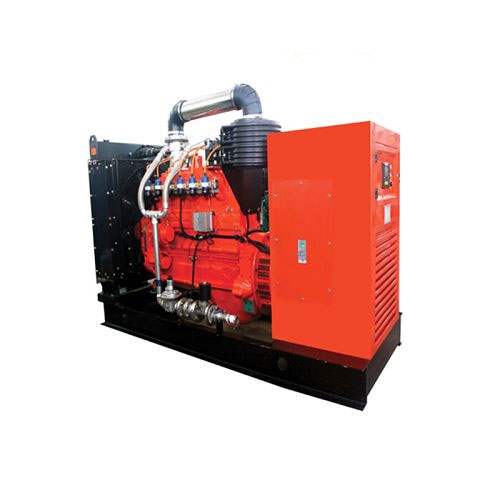
Ratings
| Rated Power | kVA | 150 |
| kW | 120 | |
| Voltage type | 50Hz, 380/220V, 3 phases and 4 wires | |
Performance Data
| Engine Brand & Model | HGN14 |
| Alternator Brand & Model | LSA44.3L10/120KW |
| Control System | Deepsea DSE6120 |
| Standard Noise Level@7m (Soundproof Sets) | 75 dBA |
| Circuit Breaker Type | 3 Poles MCCB |
| Frequency & Phase | 50hz 3Phases + 4Wires |
| Engine Speed (RPM) | 1500 |
| Fuel Consumption (Nm3/hr) 100% Load | 37.71 |
Dimensions and Weights
Content Open type Soundproof Sets Dimensions: (mm) L 2800 3500 W 850 1300 H 1480 1900 Weights (kg) 1850 2850
Engine Brand & Model: HGN14
Engine Data
No. of Cylinders 6 Engine power(KW) 145 Cycle 4 Stroke Cylinder Type Wet Bore * Stroke (mm) 140 * 152 Compression Ratio 0.459027778 Induction Aftercooled Displacement (L) 14 Cooling Method Water cooled Governing Type Electronic Starting method 24V DC motor Coolant capacity, including radiator (L) 66.8 Lubricant Oil 15W40-CF4 or above grade Oil pan capacity (L) 36
◇Open the gas fuel switch, adjust the gas pressure to 0.8-1.6Kpa.
◇Open the power supply switch and ensure indicator light is on, then start genset according to the control system operating specifications.
◇Turn off gas fuel switch if genset fail to start for three times. In order to discharge the residual gas, please start genset again. But before that, please check the malfunction and troubleshooting.
◇After genset starting, the speed should be controlled about 1500RPM and note the reading of oil pressure carefully. If the oil pressure have no indicator, stop genset and check it immediately.
◇If the genset operate normally, turn off air switch and increase the load gradually.
Please Note: air switch have the protective equipment of decompression. So it can be turn off when the genset voltage reach 70% rated voltage. (When turn off switch, the shift handle should be button up firstly and then turn off upwards). After the switch turn on, if genset voltage is reduced to 40-70% rated voltage, this switch will jump upwards once again, but it will not be the "off" position, all these situation is normal.

Hot Tags: 120 KW Gas Generator, China, suppliers, manufacturers, factory
A 120 KW Gas Generator is a medium-capacity power generation system designed to produce stable electrical output using gaseous fuels such as natural gas, biogas, or LPG. It is widely used in industrial facilities, commercial buildings, construction sites, agricultural operations, and emergency backup systems.
As global demand for cleaner and more efficient energy increases, the 120 KW Gas Generator system has become a preferred solution due to its balance of power output, fuel efficiency, and lower emissions compared to traditional diesel generators.
This article provides a complete overview of the 120 KW Gas Generator, including working principles, technical specifications, advantages, applications, installation requirements, and maintenance guidelines.
A 120 KW gas-powered generator is an engine-driven electrical power system that converts chemical energy from gas fuel into mechanical energy, which is then transformed into electrical energy through an alternator.
Fuel (natural gas / biogas / LPG) → Engine combustion → Mechanical rotation → Electrical energy output (120 KW)
The system is engineered for:
Continuous power supply (Prime Power)
Emergency backup power (Standby Power)
Peak shaving in industrial energy systems
A 120 KW Gas Generator Set operates through four main stages:
Gas is delivered through pipelines or storage tanks. Pressure regulators ensure stable fuel flow.
The gas-air mixture is compressed and ignited inside the engine cylinders, generating controlled explosions that drive pistons.
The piston motion rotates the crankshaft, producing mechanical energy.
The alternator converts mechanical energy into electrical power with stable voltage and frequency output.
Below is a general specification table commonly associated with industrial 120 KW Gas Generator systems:
| Parameter | Specification |
|---|---|
| Rated Power | 120 KW |
| Rated Voltage | 220V / 380V / 400V (optional) |
| Frequency | 50Hz / 60Hz |
| Power Factor | 0.8 |
| Engine Type | 4-stroke gas engine |
| Fuel Type | Natural gas / Biogas / LPG |
| Cooling System | Water-cooled |
| Starting System | Electric start |
| Control System | Digital control panel / PLC system |
| Noise Level | 65–75 dB (with enclosure) |
| Fuel Consumption | Varies by load (approx. 8–12 m³/h natural gas) |
| Operation Mode | Prime / Standby |
| Alternator Type | Brushless synchronous alternator |
| Insulation Class | H Class |
| Protection Grade | IP23–IP55 |
Powered by pipeline natural gas, ideal for continuous industrial operation.
Uses methane-rich biogas from waste treatment systems, suitable for farms and wastewater plants.
Uses liquefied petroleum gas for areas without pipeline access.
Fully enclosed with soundproof canopy for urban or noise-sensitive environments.
Installed inside a container for outdoor or remote deployment.
Optimized combustion systems ensure maximum energy extraction from fuel.
Produces significantly lower NOx, SOx, and CO2 compared to diesel generators.
Advanced voltage regulation ensures consistent electrical performance.
Designed for continuous operation with heavy-duty components.
Compatible with multiple types of gaseous fuels.
A 120 KW Gas Generator system produces cleaner energy with reduced greenhouse gas emissions, making it compliant with modern environmental regulations.
Gas fuel is generally cheaper and more stable in price compared to diesel fuel, reducing long-term operating costs.
Gas engines produce less carbon residue, resulting in reduced engine wear and longer maintenance intervals.
Compared to diesel units, gas generators operate more quietly, especially when equipped with soundproof enclosures.
Provides continuous power for industrial processes and critical infrastructure.
Manufacturing plants
Food processing facilities
Textile factories
Shopping malls
Hotels
Office complexes
Farms
Greenhouses
Irrigation systems
Microgrids
Distributed energy systems
Peak shaving applications
Hospitals
Data centers
Communication stations
Fuel consumption varies depending on load conditions and fuel type.
| Load Level | Natural Gas Consumption |
|---|---|
| 25% Load | 3–5 m³/h |
| 50% Load | 5–7 m³/h |
| 75% Load | 7–10 m³/h |
| 100% Load | 10–12 m³/h |
Efficiency depends on:
Engine technology
Load stability
Maintenance condition
Ambient temperature
Proper installation ensures safety and performance.
Well-ventilated area
Flat and stable foundation
Distance from flammable materials
Stable pressure pipeline
Safety shut-off valves
Gas filtration system
Proper grounding system
Load balancing configuration
Automatic transfer switch (ATS) recommended
Adequate airflow
Exhaust system installation
Temperature monitoring system
Regular maintenance improves lifespan and efficiency.
Check oil level
Inspect gas pressure
Monitor voltage output
Clean air filters
Inspect fuel lines
Check cooling system
Test battery system
Inspect alternator
Tighten electrical connections
Engine overhaul inspection
Replace worn components
Full system calibration
| Feature | Gas Generator (120 KW) | Diesel Generator |
|---|---|---|
| Fuel Cost | Lower | Higher |
| Emissions | Low | High |
| Noise Level | Quiet | Loud |
| Maintenance | Less frequent | More frequent |
| Starting Performance | Moderate | High |
| Fuel Availability | Pipeline dependent | Widely available |
Modern systems include multiple safety protections:
Over-voltage protection
Over-current protection
Over-temperature shutdown
Gas leakage detection
Emergency stop system
Automatic alarm system
A modern 120 KW Gas Generator uses intelligent control systems:
Digital display panel
Remote monitoring capability
Automatic start/stop
Fault diagnostics
Load management system
The 120 KW Gas Generator system is considered environmentally friendly because:
Lower carbon emissions
Reduced particulate matter
Efficient fuel combustion
Compatibility with renewable biogas
This makes it suitable for sustainable energy projects and green infrastructure development.
Investing in a 120 KW Gas Generator provides:
Lower operational fuel costs
Reduced maintenance expenses
Longer equipment lifespan
Improved energy independence
Stable long-term ROI
Check gas supply
Inspect battery voltage
Verify ignition system
Check fuel pressure
Inspect air filters
Verify load conditions
Check cooling system
Clean radiator
Ensure proper ventilation
The development of 120 KW gas generator systems is moving toward:
Smart IoT monitoring systems
Higher thermal efficiency engines
Hybrid renewable integration
Lower emissions compliance (Euro VI / EPA standards)
Noise reduction advancements
The 120 KW Gas Generator is a highly efficient, environmentally friendly, and cost-effective power solution for industrial and commercial applications. Its flexibility in fuel usage, low emissions, and reliable performance make it a strong alternative to traditional diesel generators.
With proper installation and maintenance, a 120 KW Gas Generator system can provide long-term stable energy output, supporting critical infrastructure and industrial growth worldwide.
This website uses cookies to ensure you get the best experience on our website.

 Español
 Portugues
 Pусский
 Français
 Deutsch
 한국어
 العربية
 Italiano
 Polski
 ไทย
 Türk dili
 Melayu
 Tiếng Việt
 Magyar
 עִברִית
 فارسی
 українська
 Suomalainen



 Phone