

KDGH300-NG 50HZ
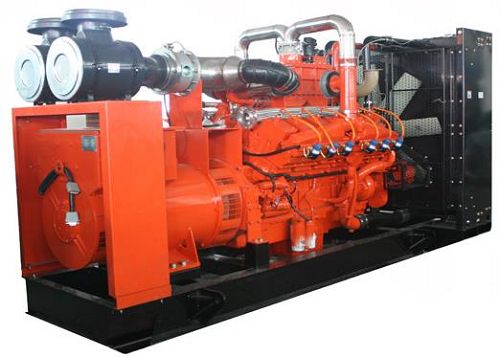
Ratings
| Rated Power | kVA | 375 |
| kW | 300 | |
| Voltage type | 50Hz, 380/220V, 3 phases and 4 wires | |
*Ratings at 0.8 power factor
Performance Data
| Engine Brand & Model | K19N-G1 |
| Alternator Brand & Model | LSA47.2VS2/300KW |
| Control System | Deepsea DSE6120 |
| Standard Noise Level@7m (Soundproof Sets) | 75 dBA |
| Circuit Breaker Type | 3 Poles MCCB |
| Frequency & Phase | 50hz 3Phases + 4Wires |
| Engine Speed (RPM) | 1500 |
| Fuel Consumption (Nm3/hr) 100% Load | 86.19 |
* The above fuel consumption is calculate with the natural gas whose heat value is 35.8MJ/Nm3
Dimensions and Weights
| Content | Open type | Soundproof Sets | |
| Dimensions: (mm) | L | 3500 | 5600 |
| W | 1250 | 2000 | |
| H | 2020 | 2500 | |
| Weights (kg) | 3380 | 4985 | |
Engine Brand & Model: HGKT19
Engine Data
| No. of Cylinders | 6 in-line | Engine power(KW) | 341 |
| Cycle | 4 Stroke | Cylinder Type | Wet |
| Bore * Stroke (mm) | 159 * 159 | Compression Ratio | 11.5:1 |
| Induction | Turbocharged & Aftercooled | Displacement (L) | 18.9 |
| Cooling Method | Water cooled | Governing Type | Electronic |
| Starting method | 24V DC motor | Coolant capacity, including radiator (L) | 115 |
| Lubricant Oil | 15W40-CF4 or above grade | Oil pan capacity (L) | 87 |
How to acquire oil samples:
Hot oil or components can cause injury. Don’t let the heat oil or components contact skin. This operation shall be done by trained person.
Get sample by installing a sampling valve. If no sampling valve, please use a vacuum pump along with a long hose. Remove the engine dipstick and insert hose into pipe of dipstick.
In order to ensure the representative of sample, the sample should be taken when the engine stops after a period of normal running.
In order to prevent samples being contaminated, the insurance used should be made clean.
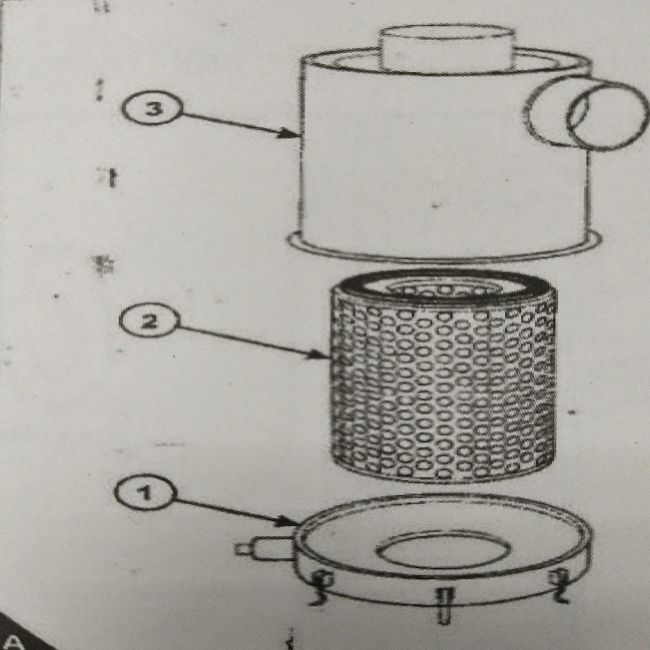
How to replace air filter core:
Air filter cores contain a paper core which can not be cleaned by water. Change it according to the following steps: Loose clip, take off the cover(A1), remove the filter(A2) and discard it; Thoroughly clean the inter shell(A3), replace it with new filter, then tighten the cover; Resetting limit indicator.

Hot Tags: 300 KW Gas Generator, China, suppliers, manufacturers, factory
300 KW Gas Generator: Complete Technical Guide for Industrial and Commercial Power Systems
A 300 KW Gas Generator is a medium-to-large scale industrial power generation system designed to produce electricity using gaseous fuels such as natural gas, biogas, landfill gas, or other methane-rich fuel sources. It is widely used in manufacturing plants, commercial buildings, agricultural facilities, wastewater treatment plants, and distributed energy systems.
As global energy demand continues to rise, industries are increasingly adopting gas-powered generator systems due to their efficiency, lower emissions, and fuel flexibility. The 300 KW gas generator is particularly valued because it provides a balance between high power output and operational efficiency, making it suitable for continuous and stable energy supply.
Compared with diesel generators, gas generators offer cleaner combustion, reduced noise levels, and lower long-term fuel costs, making them a preferred solution for sustainable industrial energy systems.
What Is a 300 KW Gas Generator?
A 300 KW Gas Generator is an internal combustion engine-based power generation system that converts chemical energy from gaseous fuel into mechanical energy, which is then transformed into electrical energy through an alternator.
Industrial electricity generation
Backup power supply system
Continuous 24/7 operation
Peak shaving energy support
Combined heat and power (CHP) applications
Distributed energy resource (DER) system
This makes it suitable for both grid-connected and off-grid applications.
Importance of 300 KW Gas Generator in Modern Energy Systems
The 300 KW gas generator plays a critical role in modern decentralized energy infrastructure.
Ensures uninterrupted electricity for industrial operations.
Can operate on multiple gas types:
Natural gas
Biogas
Landfill gas
Industrial waste gas
Produces significantly fewer pollutants compared to diesel generators.
Reduces long-term energy expenses.
Provides independence from unstable grid supply.
Working Principle of 300 KW Gas Generator
The operation process involves multiple energy conversion stages.
Fuel gas is delivered from pipelines, storage systems, or biogas digesters.
Gas is treated before combustion:
Pressure regulation
Moisture removal
Impurity filtration
Gas is mixed with air and ignited inside engine cylinders.
The combustion process drives pistons to generate rotational energy.
The alternator converts mechanical energy into electrical output.
Electricity is distributed to industrial loads or grid systems.
Key Components of 300 KW Gas Generator
The core power unit of the generator.
Features:
High thermal efficiency
Continuous operation capability
Low emission combustion
Turbocharged optional design
Converts mechanical energy into electrical power.
Features:
Three-phase output
Stable voltage regulation
High insulation class
Industrial durability
PLC-based intelligent controller ensures automation.
Functions:
Automatic start/stop
Load monitoring
Fault protection
Remote control capability
Frequency regulation
Maintains optimal engine temperature.
Types:
Water cooling system
Radiator cooling system
Heat exchanger system
Reduces friction and extends engine lifespan.
Ensures stable air-fuel ratio for efficient combustion.
Technical Specifications of 300 KW Gas Generator
Parameter
Specification
Rated Power | 300 KW |
Standby Power | 330 KW |
Frequency | 50 Hz / 60 Hz |
Voltage | 400V / 415V / 480V |
Power Factor | 0.8 |
Fuel Type | Natural Gas / Biogas / Landfill Gas |
Engine Type | Gas Internal Combustion Engine |
Starting Method | Electric Start |
Cooling System | Water Cooled |
Operation Mode | Continuous Duty |
Speed | 1500 / 1800 RPM |
Protection Class | IP23 |
Control System | PLC Intelligent Controller |
Performance Characteristics
Maintains stable voltage and frequency under varying load conditions.
Depends on gas quality and engine tuning.
Gas Quality
Efficiency Level
Low Quality Gas | Moderate |
Standard Gas | Good |
High Methane Gas | Excellent |
Designed for continuous operation between 25%–100% load.
Gas Consumption Rates
Load Level
Consumption (m³/h)
25% Load | 55–70 m³/h |
50% Load | 85–110 m³/h |
75% Load | 120–150 m³/h |
100% Load | 160–190 m³/h |
Advantages of 300 KW Gas Generator
Provides stable industrial-scale electricity.
Cleaner combustion compared to diesel systems.
Supports multiple gas types.
Designed for 24/7 industrial use.
Reduces long-term electricity expenses.
Ensures consistent power quality.
Applications of 300 KW Gas Generator
Supports production lines and heavy machinery.
Ensures uninterrupted IT operations.
Provides backup power for critical systems.
Used for peak shaving and backup power.
Utilizes biogas for renewable electricity.
Converts landfill gas into usable electricity.
Supports large-scale farm energy systems.
Combined Heat and Power (CHP) Applications
The 300 KW gas generator is widely used in CHP systems.
Higher overall efficiency
Reduced fuel consumption
Heat recovery utilization
Lower operating costs
Source
Application
Engine Cooling Water | Heating systems |
Exhaust Gas | Industrial processes |
Lubrication Oil | Hot water production |
Installation Requirements
Proper ventilation
Stable foundation
Safe gas handling area
Maintenance accessibility
Circuit breakers
Grounding system
Distribution panel
Protection devices
Stable gas supply is essential for continuous operation.
Maintenance Requirements
Oil level inspection
Temperature monitoring
Gas pressure verification
Filter cleaning
Cooling system inspection
Electrical connection check
Sensor calibration
Lubrication system check
Ignition system inspection
Engine overhaul
Alternator testing
Full system evaluation
Safety Considerations
Methane detection systems must be installed.
Emergency shutdown and fire suppression systems are required.
Proper grounding and overload protection are essential.
Environmental Benefits
Lower CO₂ and NOx emissions compared to diesel systems.
Supports biogas and landfill gas utilization.
Transforms waste gas into electricity.
Economic Benefits
Reduces dependency on grid electricity.
Provides long-term financial returns.
Uses low-cost or waste gas sources.
Comparison with Diesel Generators
Feature
300 KW Gas Generator
Diesel Generator
Emissions | Low | High |
Fuel Cost | Lower | Higher |
Noise Level | Low | High |
Maintenance | Moderate | High |
Efficiency | High | Moderate |
Future Development Trends
The gas generator industry continues to evolve.
IoT-based real-time monitoring.
Predictive maintenance and efficiency control.
Integration with solar and battery storage.
Advanced combustion and exhaust treatment systems.
Frequently Asked Questions (FAQ)
It is an industrial generator that produces electricity using gas fuel.
Natural gas, biogas, landfill gas, and industrial waste gas.
Yes, it is designed for 24/7 operation.
Approximately 160–190 m³/h at full load.
Yes, it produces lower emissions than diesel systems.
Yes, it is widely used in combined heat and power applications.
The 300 KW Gas Generator is a powerful and efficient industrial energy solution designed for stable and continuous electricity production. With its fuel flexibility, low emissions, and high operational efficiency, it plays a critical role in modern distributed energy systems.
Its ability to support manufacturing, commercial facilities, agricultural operations, and renewable energy projects makes it an essential technology for sustainable industrial development and long-term energy security.
This website uses cookies to ensure you get the best experience on our website.

 Español
 Portugues
 Pусский
 Français
 Deutsch
 한국어
 العربية
 Italiano
 Polski
 ไทย
 Türk dili
 Melayu
 Tiếng Việt
 Magyar
 עִברִית
 فارسی
 українська
 Suomalainen



 Phone